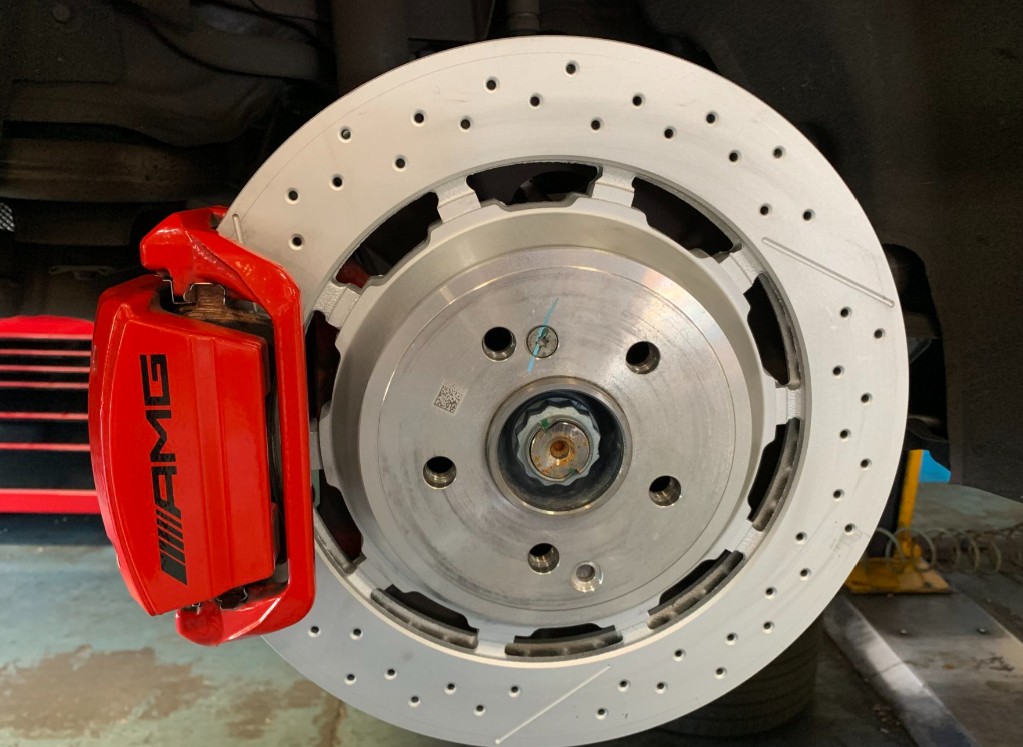
There is a moment most car owners know well — you notice something slightly off with your brakes. Maybe the pedal feels a touch different, or there is a faint squeal when you slow down at the lights. The instinct, more often than not, is to tell yourself it can wait. And for a week or two, perhaps it can. But braking is one of the most mechanically demanding systems in your vehicle, and the longer a fault goes unaddressed, the more it costs — financially, mechanically, and in terms of road safety. It is a scenario that trusted mechanics in Hawthorn encounter regularly — drivers who knew something felt off but kept pushing the appointment back, only to arrive with a repair bill that far exceeded what an earlier visit would have cost.
Why Brakes Degrade Faster Than Most Drivers Realise
Your vehicle’s braking system does not deteriorate on a predictable schedule. It degrades relative to how you drive, the weight of your vehicle, the type of roads you use, and the conditions you encounter daily. Drivers who frequently navigate stop-start traffic, steep gradients, or carry heavy loads will find their brake components wear considerably faster than those clocking up long highway kilometres with minimal stopping.
The key components — brake pads, rotors, callipers, and brake fluid — each play a specific role. When one starts to fail, the others compensate, which in turn accelerates their wear. A set of brake pads that has worn thin, for instance, will begin to cause micro-scoring on the rotor surface. What might have been a straightforward pad replacement at an earlier stage becomes a rotor replacement, sometimes on both axles.
Understanding this cascade effect is critical. No single component in your braking system operates in isolation. Once the weakest link gives way, the chain reacts quickly, and repair costs rise accordingly.
The True Financial Cost of Waiting Too Long
This is where delayed brake repairs become a genuine financial burden. Many drivers avoid booking a service because they are concerned about the cost. The irony is that the longer the delay, the higher that cost climbs.
A standard brake pad replacement — caught at the right time — is a relatively affordable repair. Allow those pads to wear beyond their serviceable limit, and you are looking at rotor resurfacing or full rotor replacement. In more serious cases, worn pads left completely unattended can seize callipers, damage brake lines, or compromise the master cylinder — parts that carry a significantly higher price tag.
Consider the typical repair cost escalation a mechanic sees on a vehicle that has been left too long:
Worn pads caught early: replacement only. Worn pads left too long: pads plus rotor machining or replacement. Seized calliper from neglect: pads, rotors, and calliper rebuild or replacement. Brake fluid degraded beyond safe use: full system flush, potential line inspection, and possible master cylinder work.
Each delay compounds the invoice. And none of this accounts for the increased fuel consumption that comes from a braking system that is not releasing cleanly — dragging brakes quietly burn extra fuel with every kilometre you drive.
What Happens to Your Safety When Brakes Are Not Roadworthy
Beyond cost, the more serious consequence of delayed brake repairs is the direct risk to safety. Brakes are not a comfort feature — they are the primary safety mechanism between a moving vehicle and everything in its path.
Stopping distance increases measurably as brake components degrade. Research and real-world testing consistently shows that worn brake pads extend the distance required to bring a vehicle to a full stop, particularly in wet conditions or emergency situations where maximum braking force is suddenly required.
Brake fade — a condition where repeated heavy braking causes the system to overheat and lose effectiveness — is far more likely in a vehicle with degraded components. This is not a rare event on Australian roads; it happens regularly in hilly terrain, during heavy traffic braking, and when carrying loads that push a vehicle near its GVM.
If your braking system fails or underperforms during a critical moment, no other vehicle feature can compensate for it. Not tyres, not electronic stability control, and not driver reaction time. The brakes either work, or they do not.
Warning Signs That Mean Your Brakes Need Attention Now
Knowing what to listen for — and what to feel — can prevent a small issue from becoming an expensive repair. Your vehicle will usually give you clear signals well before the braking system reaches a critical state.
A grinding or metal-on-metal noise when braking is one of the clearest signs that brake pads have worn through to the backing plate and are now contacting the rotor directly. This is beyond a warning — it means damage is already occurring.
A soft or spongy brake pedal suggests air or moisture has entered the brake lines, or that brake fluid has degraded. Neither condition is safe to drive on for any extended period. Similarly, a pedal that pulses or vibrates underfoot often points to warped rotors, which affects braking consistency and control.
If your vehicle pulls to one side when you apply the brakes, it is typically a sign of uneven brake wear, a stuck calliper, or a compromised brake line on one side. Ignoring this symptom does not just affect the braking system — it can introduce handling instability and uneven tyre wear across the axle.
A burning smell after driving, particularly if you have been descending a hill or braking frequently, can indicate that your brake pads are overheating or that a calliper is dragging. This is a condition that should be inspected the same day.
How Routine Brake Checks Protect Your Long-Term Investment
One of the simplest things you can do as a car owner is incorporate a brake inspection into your regular service schedule. Most quality workshops will assess brake pad depth, rotor condition, calliper movement, and fluid quality as part of a logbook or general service.
This proactive approach means issues are identified while they are still minor — and minor issues are inexpensive to fix. It also means you have a clear record of your vehicle’s brake health over time, which is useful when assessing the ongoing roadworthiness of the car and its value if you ever decide to sell.
Brake fluid, in particular, is a component that many drivers never think about. Over time, it absorbs moisture from the atmosphere, which lowers its boiling point and reduces its effectiveness under heavy braking. Most manufacturers recommend a fluid change every two years, regardless of how the vehicle looks on the surface.
Whether you are dealing with minor pad wear or a more involved repair, finding a workshop that offers genuine brake repairs in Hawthorn means more than just fixing what is broken — it means getting an honest assessment, a clear quote before work begins, and a mechanic who explains what they found and why it matters.
Australian Road Conditions and Their Impact on Brake Wear
Driving conditions in Victoria present a specific set of challenges for brake systems. Urban environments — with their frequent stops, tram-zone intersections, and heavy commuter traffic — place sustained load on brake pads and rotors in a way that long-distance country driving does not.
Melbourne’s weather patterns also play a role. Cold morning starts followed by rapid temperature increases affect how quickly brake components reach operating temperature, and extended wet periods mean more moisture in the air — which accelerates brake fluid degradation and can lead to surface rust on rotors if a vehicle sits idle for several days.
Hilly suburbs and tight residential streets with frequent turns and low-speed braking create their own pattern of wear — different from freeway driving, but no less demanding over time. A vehicle that does most of its kilometres in dense suburban traffic will often need brake attention more frequently than its logbook schedule would suggest.
If you are regularly driving through areas like Hawthorn East, Balwyn, Camberwell, Canterbury, Kew, Toorak, Burnley, Malvern, or Glen Iris, your brake system is working hard every day through some of Melbourne’s busiest and most stop-intensive streets. Factoring that into your service schedule is a practical way to stay ahead of wear — and ahead of the cost curve.
Do Not Let a Minor Brake Issue Become a Major Repair Bill
If you have noticed any of the warning signs — or if you simply cannot remember the last time your brakes were properly inspected — now is the right time to book a check-up. Bob Watson Service Centre has been servicing vehicles across Melbourne’s inner east since 1977. Their fully qualified technicians carry out thorough brake inspections and repairs across all makes and models, with no surprises and no unnecessary upselling — just honest advice and quality workmanship. Call today on 03 9882 2451 to book your brake inspection. A small check today could save you considerably more tomorrow.